Thursday, May 27, 2004

There are black and white checked tables wherever you go...

I went with my friend C. to see "Coffee and Cigarettes" tonight. It snapped me partway out of my funk. It is black and white, a series of short scenes, each with different actors, playing themselves or at least everyday people having coffee and cigarettes and just talking. The scenes get longer as the movie progresses, they start circling back to ideas, themes, and scraps of dialogue from earlier vignettes, and the movie's themes build. A brilliant layered approach... the movie is, I think, talking about people's need to fit in, the way we hide ourselves to be cool and the way we make ourselves vulnerable in order to be loved. We can all be socially awkward, at times, and we can all be the ones making someone else feel uncomfortable. And there's some stuff about Nikola Tesla, of the coil, first brought up in a scene with Jack & Meg White of the White Stripes (many of the actors are actually more musicians; Tom Waits & Iggy Pop do a funny yet excruciating scene together). Tesla apparently "perceived the Earth as a conductor of acoustical resonance" - an idea to which the film returns. Anyway... it's a great movie. I would go back and see it again.

Wednesday, May 26, 2004

Following Newton's Laws: A WebQuest

Introduction

You may not know it, but you and the rest of the universe obey a set of laws discovered by Isaac Newton way back in the 1600's: Newton's Laws. You and your teammates are creative designers. You have been hired by Middle School Enterprises to find an interesting way to teach fourth graders about Newton's Laws. You will first need to research the laws and figure out how they affect your life. Then, choose one of the following options:
  • Create a 5 minute long educational video to teach younger students about Newton's Laws.
  • Write a children's book that teaches kids about Newton's Laws.


Your bosses at Middle School Enterprises are eagerly awaiting your finished product, so make sure you stay on schedule!

*****

The Task

You & your team of creative designers will produce one of the following options:
  • A short (5 min.) educational video that will help fourth graders understand Newton's Laws.
  • A children's storybook (5-15 pages) that will help fourth graders understand Newton's Laws.


If you are making a video, you will need to turn in a script to Ms. Frizzle, then sign up for a time to use the digital video camera.

If you are writing a children's book, you will need to type your story in Microsoft Word, then illustrate it and cut-and-paste your story and illustrations into one final book.

*****

The Process

To accomplish this project, you will follow these steps. The amount of time to spend on each step is listed in parentheses.
1. First you'll be assigned to a team of 3-5 students.

2. Read the choices of roles below. Agree on one role for each team member. If there are more jobs than team members, some team members can have two roles. If you are having trouble choosing roles, it's okay to vote, flip a coin, or agree to rotate roles each day. (This step should take you 5-7 minutes).


Roles

Organizer: Your job is to keep your group moving along, and to make sure all materials are kept neatly in the project folder.
o Pay attention to the times given in parentheses and give your group time warnings when you are taking too long on one step.
o Think of ways to split up work so that more than one step gets done at once.
o Collect your group's materials at the end of each period so that nothing gets lost.


Art Director: Your job is to make sure your group's work is attractive. You shouldn't do all the artwork yourself, just make sure that your group pays attention to how your work looks.
o Video: Coordinate costume & props design. Make sure actors are looking at the camera when they speak.
o Book: Make sure your group chooses a style for your illustrations. Think about the best fonts to use, and how to assemble your book very professionally.


Peacemaker: Your job is to help your teammates work together cooperatively.
o Make sure everyone in your group is included in important decisions. Do this by asking "What do you think?" to each member of the group.
o Remind your group of strategies for making decisions, such as discussing the pros & cons of each idea, voting, flipping a coin, compromising (coming up with a new idea that includes parts of both ideas), or taking turns making decisions.
o Set a good example! Use polite language, such as "please," "thank you," "what do you think?" and so forth.


Teacher Liaison: You are the member of your group who can ask for Ms. Frizzle's help, advice, or opinion. o Before asking for Ms. Frizzle's help, make sure that no one in your group has the answer to what you're asking. Make sure everyone in your group thinks it's time to ask the teacher!
o Raise your hand and wait quietly for Ms. Frizzle to see you.
o When the teacher comes to your table, make sure that all your teammates are paying attention and participating in the discussion.


Computer Guru: You are responsible for setting up and shutting down your group's laptop(s), and making sure all work is saved. You are NOT the only person in your group who gets to use the laptop!
o Get the laptop from the cart, including all power cords. Turn it on and open your group's documents.
o Pay attention to the battery and arrange to plug in the laptop if needed.
o Make sure that your group saves all work to the hard drive AND to at least one group member's eChalk account.
o Return the laptop to the cart, very neatly. Make sure it is plugged in and charging.
o Keep track of which laptop your group is using.


3. Use the following resources to learn more about Newton's Laws. Complete the notes packet to show what you've learned. You might want to divide up the three laws among your teammates, research one law each, then teach each other what you've learned. (This step should take 2 class periods).

Resources
(To come - I can't cut & paste the HTML links into the blog, so this part is going to take a little while).

4. Decide whether to make an educational video or write a children's book. The rest of the steps depend on whether you choose video or book.

If you're making a video...
5. Brainstorm ideas for your video. Then write a script and turn it in for feedback from Ms. Frizzle. (1 class period)

6. After getting Ms. Frizzle's feedback, revise your script and get the final draft approved. (1 class period)

7. Gather any costumes and props you need and rehearse your parts at least three times. (30 minutes, and for homework)

8. Schedule a time to shoot your video, and then film it with Ms. Frizzle's help. (15 minutes)

9. When you're finished, use the rubric to grade your own work. (10 minutes)

10. Finally, share your video with your classmates!

If you're writing a children's book...
5. Brainstorm ideas for an interesting story that will include lots of information about Newton's Laws. Then, write the first draft of your story. (1 class period)

6. Turn in a copy of your first draft to Ms. Frizzle for feedback. While she reads it, decide what pictures you need to illustrate your story, and what text will go with each picture. (1 class period)

7. After receiving feedback from Ms. Frizzle, split up the work. Half your group should revise the story, while the other half draws the illustrations. (1 class period)

8. After you finish your final draft and all your illustrations, assemble your book, including a cover! (30 minutes)

9. Use the rubric to grade your own work. (10 minutes)

10. Finally, share your book with your classmates!

*****

Evaluation
(To come - this is a table, so I'm not going to include the whole thing, but perhaps I'll list the categories...)

*****

Conclusion

Congratulations! By now, you should know quite a bit about Newton's Laws and how they affect everyday life. You've also created a video or children's book which has impressed Middle School Enterprises... they are talking about hiring your team for another project in the future!

*****

Credits & References

This WebQuest is based on a template available at The WebQuest Page and is adapted from this WebQuest on Newton's Laws.

And some advice for everyone! Posted by Hello

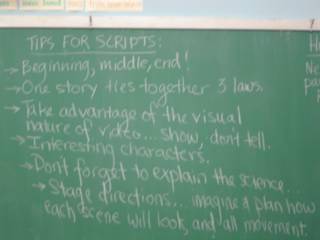
Advice for my aspiring screenwriters... Posted by Hello

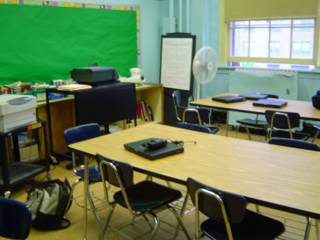
A peek into Ms. Frizzle's classroom. Check out our laptops! Posted by Hello

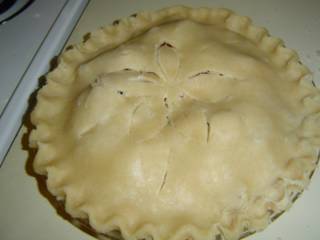
Last night's project... to be continued tonight. Posted by Hello

Tuesday, May 25, 2004

Giftedness

Mrs. Chew said it better than I could (as so often happens!)... Oftentimes giftedness is described as something innate, in much the same way that certain learning disabilities are described as genetic or something you're born with. So I was surprised to see that Suzie's list was mostly stuff that is under someone's control, and generally correlates with being middle class. Thus, my question in her comments about whether it was causal or correlative... It seems to me that if the idea of giftedness as inborn is valid, then a school should worry if all their "gifted" kids come from stable, middle class families with talented parents. Her follow-up post gets into this a bit, that many kids from minority or low-income backgrounds, or with non-verbal forms of giftedness, get overlooked. She goes on to defend the idea of innate giftedness as a valid reason for kids getting additional education resources. I'm not taking that one on right here. In general, I believe that there are a few - very few - kids who are so unusually intelligent that they need a whole different approach to education. Then, most of the kids in GT classes are very intelligent but mostly lucky (as Mrs. Chew proposes). Their parents are smart enough to realize that GT classes offer them a more rigorous, interest-driven, individualized education than the regular tracks. True, but I would argue that nearly all children would benefit from approaches such as Suzie describes! Finally, a few kids need special education services. I think the special ed situation could use a major overhaul; some kids desperately need different approaches, while many others in those classes would be fine if the regular track teachers had the resources & training to provide ALL the kids with the kind of individualized instruction they would get in special ed or GT classes. These special approaches are often just the kind of education we should want for all our children - and I say that as someone who is not particularly talented at differentiated instruction or any of the rest of it.

Anyway, this is a sensitive topic and I may not have made myself absolutely clear, so I hope I don't get flamed! It's off to bed for now and perhaps a revision to clarify what I'm trying to say tomorrow.

WebQuest Virgin

Yes, that's right: I'm doing my very first WebQuest with my students. I borrowed liberally from other WebQuests found on-line to create my own, titled "Following Newton's Laws." I will try to post it or a link to it later. Basically, the kids spent yesterday and today researching Newton's Laws, and will now choose one of the following projects to teach 4th graders what they've learned: Write a children's book or make a 5-minute educational video. We should wrap it up by the end of next week.

More on the whole thing after I get some lab reports graded.

I've been a little blue the last couple of days, no particular reason, but I haven't felt much like blogging. I've been eating chocolate and running, in hopes of resetting the old brain chemistry!

Sunday, May 23, 2004


Who can resist? Posted by Hello

Shop4Class

It's the first ever Shop4Class week in NYC. This is a Caroline Kennedy initiative; between May 21 and May 28, a bunch of stores will donate a portion of their proceeds to buy books for classroom libraries for the city's kindergarten through third grade students.

Dear Fellow New Yorkers:
This week your purchases will make a real difference to the children of our city. There are few things in life more important than learning to read, and thanks to the many participating retailers, more of our school children will have books close at hand.

Surely, those of us planning to buy anything in the city this week should take a look at the list of shops and consider spending our money at those places. It's great that those stores want to give back to the community, yes.

But the whole thing begs the question: Wouldn't it be simpler to provide ample funding in the education budget to buy enough books for the little ones?

I mean...

Shop4War: This week only, the following retailers will donate a portion of their proceeds to the US Army to buy much-needed guns for the soldiers.

Can you just imagine?

*****

Singing for Peace

This is my home, the country where my heart is
Here are my hopes, my dreams, my holy shrine.
But other hearts in other lands are beating,
With hopes and dreams as true and high as mine.
~Finlandia


I ain't afraid of your Yahweh,
I ain't afraid of your Allah,
I ain't afraid of your Jesus,
I'm afraid of what you do in the name of your god.
...
Rise up to your higher power
Free up from fear, it will devour you
Watch out for the ego of the hour
The ones who say they know it
Are the ones who will impose it on you.
~I Ain't Afraid (Holly Near)

Friday, May 21, 2004

Work-in-progress

For best results, scroll upwards from the bottom of the post.

Go ahead, try this at home!


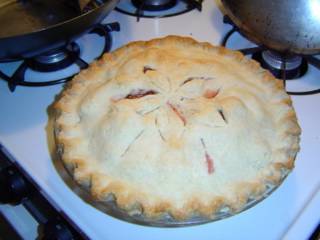
C'est finis! Posted by Hello

If I could only send smell over the internet... Posted by Hello

Now it's ready for the oven! See you in 35 minutes... Posted by Hello

Alex with our cat... an adorable interruption... Posted by Hello

"It looks like it's going to give birth to an alien," says my roommate. Posted by Hello

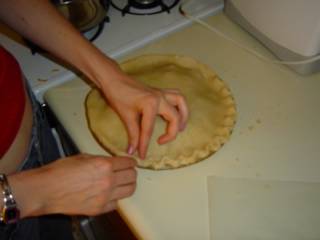
I still know how to flute a pie crust! (I did this thousands of times when I worked at a bakery in high school...). Posted by Hello

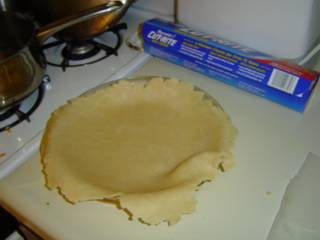
The upper crust... Posted by Hello

Now your mouth starts to water... Posted by Hello

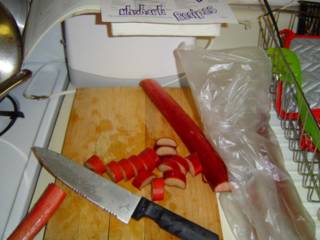
I filled the pie with strawberries & rhubarb... Posted by Hello

Press it gently into the pie pan... Posted by Hello

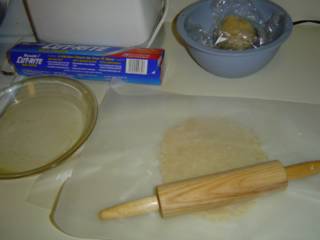
Roll the dough between layers of waxed paper... Posted by Hello

Zesty! Posted by Hello

The strawberries are organic... Posted by Hello

Then, the secret ingredient... Posted by Hello

I started with the crust... Posted by Hello

Thursday, May 20, 2004

Motivation

Bronx Zoo today. It was a very easy field trip. We took only the kids who have behaved well for the last few weeks, as an incentive trip. The kids were really good and easily impressed by the animals, particularly the baboons. It was a beautiful day, too, the first this week.

This was the first time I've ever done a field trip to the zoo, which I know is weird given that I teach science and it is sooo close. There were about ten thousand kids there, it seemed like; the American Museum of Natural History was extremely organized about getting buses and classes in and out of the museum, but the zoo just let everyone fend for themselves.

Thanks to selection interviews and this trip, I have to edit a lot of lab reports tonight. I've already done 25 since 3:30 pm, but I have another 25 or so to go. I am motivating myself by stopping every time I finish ten for a fifteen-minute break. This was my email, blog, & chocolate break; next will come nail polish; after that, looking for plane fares to SF for the summer. Come to think of it, all my breaks will most likely include chocolate!

What do you think of the daily shots of the chalkboard or other classroom stuff? Worth continuing? Boring as heck? I have to be really sneaky to get the pictures, so if they are boring I'm not going to keep doing it!

Our quiz included a question comparing the momentum of two elephants, Elly & Elmer. When we got to the elephant enclosure at the zoo today, a student said, "Look, it's Elmer!" Posted by Hello

Pink is the new black. Posted by Hello

Wednesday, May 19, 2004

In three days this week, we interviewed about 140 students for next year's sixth grade class. A few were interviewing to enter as seventh graders. We are a public school, but a magnet school, and we select our students based on a combination of test scores, interviews, recommendations from former teachers, and report cards. This year, we had many more applicants than in previous years, so we had to spread out our selection process over three days. We gave the students a writing task while we called them one at a time for an interview.

Here are some of the questions:


  • Why do you want to come to this school?
  • How would you feel about having 2 hours of homework every night? (You should see some of the faces they make when they hear this question, before they pull themselves together and pretend to like the idea...).
  • Have you ever come to class unprepared? How did that make you feel? What did you do about it?
  • How would you compare yourself to the rest of your classmates?
  • Do you have a place & time for homework every day? Do you have a system for doing your homework, to decide which assignments to do first?
  • How do you prepare for an important test?
  • What do you think would be the most difficult part about coming to our school? (This gets the occasional literal answer about the bus ride being long...)
  • What is your favorite thing to do?
  • When was the last time you got in trouble? Tell me about that... How did you handle it? Have you ever been in a fight? (Interestingly, and disturbingly, many of our prospective students have been in at least one fight. A couple of kids today had accidently crossed the wrong person and been beaten up by whole groups of kids. The difference between the fifth graders and sixth graders that we interviewed is that nearly all the sixth graders had fought at least once. Welcome to Junior High, indeed.)
  • What would you do if someone were bothering you and calling you names?
  • Is there anything else you think we should know about you?

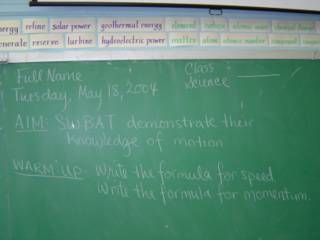
Students will be able to... Posted by Hello

Tuesday, May 18, 2004

Does anyone know...

how to turn photos from landscape to portrait to post them?

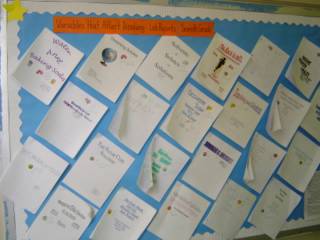
The Solutions Lab Reports! Posted by Hello

Introducing my classroom....


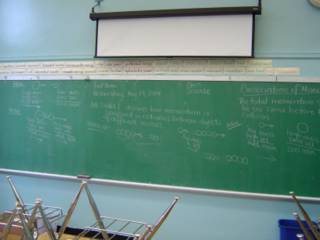
Today's chalkboard. Posted by Hello

Monday, May 17, 2004

TV Dinners

Thanks goodness for meals ready in five minutes or less. I just - and I mean JUST - got home from selection interviews which began after school today. We interviewed 50 kids. I am wiped out. More of the same tomorrow and the next day. I will tell you all about selection when it is good and over. Anyway, I will be spending my evenings editing lab reports and grading quizzes.

I have a surprise planned for y'all later this week!

Sunday, May 16, 2004

Microbes

Urged to action by Math Teacher, I am once again shining my blog-light on one of the Insignificant Microbes on the Truth Laid Bear's Ecosystem.

There at the bottom of the Ecosystem, squirming on a slide, I discovered Typical. Typical, best I can tell, is a libertarian, who posts libertarian opinions on diverse topics, ranging from the March for Women's Lives to testifying before the 9/11 commission.

Imagine my surprise when I looked a bit higher up the Ecosystem and discovered Pregnant Pauses, a blog which I have been reading occasionally for a month or two, ever since she linked to me. Here's a quote:

There have been some crows having a big argument outside of our window for the past hour or so. J. says, "What do you think they are arguing about?" I said, "They want food, but they don't want to go to Taco Bell."

I know there are a few new educators out there that I ought to have linked to by now... I'll get to y'all soon, I promise!

And in other news... I found a sublet in SF for July! (And my roommate's brother is going to take my room, so that's fabulous). It's a friend of a friend's place, and very, very close to the Exploratorium, so for once in my life, I'll have an easy commute. I would have loved to live in the Mission, but this is much more practical and $100 less than I pay per month right now. And I will be able to run in the Presidio.

Saturday, May 15, 2004

I've never...

been a guest blogger before!

Prisons

Like most people, I have been horrified by the photos of guards abusing prisoners in prisons in Iraq. I don't think anyone should be surprised, though; this is about the culture of an organization whose job is to kill people efficiently. It is about the war on terror explicitly or implicitly shifting the boundaries of what is right and appropriate. Often during the last two or three years, I have read or heard on the radio that we - the US - allow our prisoners to be interrogated in countries where we know the standard of treatment will be lower. This is also about the way that a role and an environment can encourage certain kinds of behavior, without being an excuse for the individual's lack of moral judgment.

Anyone who has taken Psych 1 at Stanford - with Professor Zimbardo - has been thinking about the Stanford Prison Experiment. The brief summary: Back in the 1970's, Zimbardo - a charismatic, stretch-the-rules showman psychology prof - recruited a number of students who were at Stanford in the summer to participate in a 2-week psych experiment. He screened the students in interviews, but did not tell them much about the experiment. Any of us could have been one of these unsuspecting participants. Within the next few weeks, half were recruited to be "guards" at a new prison constructed in the basement of the Stanford psych department. The other half were "arrested" and taken to the prison.

Our study of prison life began, then, with an average group of healthy, intelligent, middle-class males. These boys were arbitrarily divided into two groups by a flip of the coin. Half were randomly assigned to be guards, the other to be prisoners. It is important to remember that at the beginning of our experiment there were no differences between boys assigned to be a prisoner and boys assigned to be a guard.

The experiment was supposed to last 2-weeks. They cut it short after only 6 days. The guards were becoming more and more sadistic, and the prisoners more and more depressed and dangerously stressed.

You really have to read the description of what happened next - and keep in mind that it took only 6 days! Everyone - even the social psych experimenters - got into their roles.

At this point it became clear that we had to end the study. We had created an overwhelmingly powerful situation -- a situation in which prisoners were withdrawing and behaving in pathological ways, and in which some of the guards were behaving sadistically. Even the "good" guards felt helpless to intervene, and none of the guards quit while the study was in progress. Indeed, it should be noted that no guard ever came late for his shift, called in sick, left early, or demanded extra pay for overtime work.

What would you do if you found yourself a prisoner? A guard?

How does this relate to schools? How do teachers and students - and parents - take on certain roles, encouraged by the culture and environment of the institution? When are the roles positive? When are they negative?

Image?

Friday was Jeans Day, one of our once-in-a-while incentives for kids to behave. We hand out coupons the day before to those kids who have met certain standards for behavior for the past few weeks. The kids love Jeans Day; the teachers love Jeans Day.

I debuted my Periodic Table of the Elements t-shirt. The kids were enthusiastic, and at the end of the period, if they'd been good, we closed all the shades and turned off the lights, and I let them see that the radioactive elements glowed in the dark.

Yes, I am a big nerd.

The kids oohed and aahed.

Some days, I'm their young, pretty (for a white person) science teacher. Some days, I'm a geek and proud of it. I want them to know that it's okay - no, it's great! - to be both.

Thursday, May 13, 2004

It's a good thing...

that I never actually take any pictures, because I'm well on my way to becoming a total junkie thanks to this new hello posting service! It's all her fault...

A view of the Hudson last Sunday. Posted by Hello

Introducing... Valentine! Posted by Hello

I learned how to post pictures! Here's one from the March for Women's Lives. Posted by Hello

Wednesday, May 12, 2004

Some fall on you like a storm...

Last two days of afterschool today and tomorrow. Wednesdays are packed - I have only one prep, and I have to do lunch duty, and then I have afterschool immediately after school ends. Today was worse than usual thanks to the suffocating humidity (we have no AC) combined with my principal being at the Regional Office, leaving more for each of us to do. The lab on momentum which we did in class today took much, much longer than I anticipated, though it was fun and generally worked well. Now I have to decide whether & how to re-organize the next few days to allow us to finish the lab and prepare for a quiz. By 2:20, I was hot, sticky, and grumpy.

I have been doing factoring and FOIL with my high school prep kids - that is, expanding expressions like (x-y)(x+y). This was one of my favorite parts of math, and my students like it - perhaps because it's just plain cool, perhaps because they feel special for knowing something that none of their classmates know, perhaps because they pick up on my enthusiasm for it. So, as we settled into the routine of afterschool, I relaxed into a much better - albeit still hot & sticky - mood, and was able to joke around with the kids and feel like good things were happening in that class.

As the afternoon continued, the sky started to get darker and darker. One girl commented that it smelled like rain. We kept the lights off for as long as we could, to keep the room cool and for the peaceful, quiet feeling it provided. Finally, we had to turn on some lights just to be able to see our work! And then the thunder started, and then the rain. The air cleared; we felt thick sheets of humidity lift from our shoulders, our skin cool and dry.

I used to be afraid of lightning. As I grew up, I grew out of this fear, partly by learning more about lightning, partly by moving out of my parents' house and away from the tree that I was sure would get hit and fall right into my bedroom window, partly by just plain growing up, partly by coming to appreciate a storm's beauty, partly by a general facing of fears. So today, as the students were solving a problem quietly, I wandered over to the classroom windows to look at the storm. Just as I reached the window, there was a huge crack of thunder and flash of lightning. I jumped at least 20 cm, seriously! The kids all laughed. I moved back into the center of the room.

I love the way a good storm can make a day feel exciting. And I love the lightness of the air just after a storm comes in. And I love the slight charge in the air when you're in the midst of a storm.

The title of this post comes from a song by a slightly obscure yet influential singer-songwriter:

"We've all got holes to fill
And them holes are all that's real
Some fall on you like a storm
Sometimes you dig your own."
-Townes Van Zandt

Tuesday, May 11, 2004

Relativity

If you've never taught before, be prepared for the elastic nature of time during the last six weeks of school. Get ready for days that last for-e-ver, each period playing like a slow-motion movie in your head, the blades of your beat-up classroom fan turning, whirring, click, click, click... just don't become complacent, for these slow, stretched-out days snap together like a rubberband at week's end, as the days fill with field trips, field days, final exams, class trips, and the evenings fill with awards ceremonies and dances... The temperature rises and the minutes drag, the kids brains are molasses dripping down over their shoulders onto their desks, but when you go home, your brain melts and oozes and you get nothing prepared, and the days slip by unnoticed...

Today was the first truly hot, humid day of the year. I was relaxed. The classroom was sunny and felt spacious. Hotter, stickier days will come. My afternoon classes, with their fly-stuck-in-amber feel, were just a peek into the next few weeks.

My roommate says I'm "the Sarah Jessica Parker of education." Hmmmmmm.

Monday, May 10, 2004

Power

On Friday, I made a student cry. I wish I could say that it was because she is oversensitive or that I was having an unusually bad day or that it was all some kind of misunderstanding, but I can't. I did something pretty awful: I humiliated her.

I could tell she had no idea how to do the speed = distance/time problems that we were going over, so I asked her a question, hoping to start off easy and walk her through the problem. I wasn't asking her to solve anything, just to participate. So I tried to include her by asking her what the distance was, a number that was written right there on the board. She refused to answer and turned on her best I've-given-up-on-myself attitude.

That was when I should have backed off, offered her some extra support at another time. Instead, something misfired in my soul, and I kept at her, pointing out somewhat sarcastically that the answer was written right there on the board. She started to cry. I continued the lesson, moving on to another student for the answer. I already felt terrible about the whole incident, but I didn't want to extend the drama further.

During the next problem, I approached her quietly and walked her through it one-on-one. Then I apologized for being mean to her, and sent her to the bathroom to wash her face. She didn't return for the rest of the period - I had to send another girl to rescue her. Later, as the students were at their lockers, I apologized again and offered to work with her at lunchtime. She agreed.

By today, she was smiling at me again and accepted my offer of lunchtime extra-help. She even volunteered to answer a question, got it right, and earned praise. Kids are resilient. She's also seen much worse in the schools she's attended and in her home. That in no way excuses my behavior, but it's true.

Perhaps more than other jobs, teaching asks one constantly to strive to become a better person, more kind, more generous of spirit, more supportive, more patient. I have considerable power, which I occasionally misuse. I try to be reflective about my role as an authority figure. I also try to apologize to those I hurt and to myself, and forgive myself when I am not the person or teacher I hope to be. Although I'd rather not hurt anyone - least of all children - I hope that my students learn something from my occasional apology for my own misbehavior. Maybe they see that an aspect of maturity is to think about one's own behavior and take responsibility for it and apologize or make amends when it is wrong. Maybe they see that even those in power can be wrong, and can own up to it and try to fix what can be fixed. (I don't think that happens often in the lives of poor students of color from the Bronx).

Or maybe this is all an elaborate rationalization to make myself feel a little less awful.

What do you think?

Saturday, May 08, 2004

Flowers in your hair....

The letter was in my mail box today: I'm going to San Francisco this summer for the Exploratorium's program for Science teachers. I'll be in the Math-Science Connection workshop! Whoo-hoo!

Thursday, May 06, 2004

White House Asks GOP in Congress to Add $25 Billion

(apologies to Carl Hulse and Thom Shanker of the New York Times)

WASHINGTON, May 5 — The Bush administration, which once said it had enough money to provide for the nation's children through 2004, asked Republican leaders of Congress on Wednesday to add $25 billion for education, health care, and safe, affordable housing beginning Oct. 1.

The Deputy Education Secretary and the White House budget director delivered the request to the leaders in a closed hourlong meeting. After it, lawmakers said they expected to comply with the request, which would be added to more than $400 billion already sought for improvement of the lives of children worldwide.

The request, which was not a surprise to lawmakers responsible for budgets and spending, arrived as the administration tries to manage the furor over reports of Americans leaving poor children behind. And it arrived two years after the Census acknowledged that 12.1 million American children under the age of 18 lived in poverty in 2002, up from 11.7 million in 2001.

In a statement on Wednesday, President Bush took note of the many families struggling to make ends meet in the difficult economic times that made the last few years especially difficult for American children. Mr. Bush said he and the Secretary of Education had consulted teachers, school administrators, and parents before making the request.

"While we do not know the precise costs for operations next year," Mr. Bush said, "recent developments on the ground and increased demands on our educators, social workers, and other service providers indicate the need to plan for contingencies. We must make sure there is no disruption in funding and resources for our children and families."

Mr. Bush went on to say that preliminary evidence from No Child Left Behind demonstrates a clear need to provide a deeper, broader network of services to America's families and children, including access to pre-natal and childhood health care; psychological services for children who have witnessed traumatic events; clean, safe housing for families; support and advice for new parents; small, community-oriented schools where children feel recognized, loved, and challenged by their peers, parents, and teachers; and incentives for bright, educated, young people to go into and stay in the field of teaching. "What we have found when we looked at the first few years of NCLB is that we will continue to leave children behind until the day when we begin to address the impact of poverty on our children. We must move past the test-and-punish regime to a more subtle, multi-pronged solution focusing on supporting families through times of economic hardship."

In contrast to two previous emergency spending requests that totaled more than $165 billion, lawmakers said the new money would be filtered through the regular budget and appropriations process and was intended only to get the administration through the end of this year and the start of the next.

"Frankly, I think it is really not going to be enough, but it will get us through until the administration comes up with a major supplemental," said Representative C. W. Bill Young, the Florida Republican who is chairman of the Appropriations Committee, using the Congressional term for an emergency spending request.

Mr. Young said the Dept. of Education might also seek authority to shift some money it has to pay for reduced class sizes and increased pay to attract experienced, highly-educated teachers in America's schools beginning Sept. 5, the start of the next school year.

The House and Senate provided more than $25 billion in special education and family support reserves in the budgets that they adopted this year, and lawmakers said the new request would be accounted for in the spending plan, which remains to be completed and approved.

"I knew it was coming, and we budgeted for it for this exact reason," Representative Jim Nussle, the Iowa Republican who is chairman of the House Budget Committee, said. "We need money for the folks out there in the schools, and we are going to make sure it is there for them."

A senior Democrat on spending issues, Representative David Obey of Wisconsin, noting that Democrats were fully a part of the bipartisan budget discussion, said the meeting "represents yet another effort to cooperate for the benefit of all children, an issue which transcends election year politics."

"The American people should be given all the facts about the true costs of neglecting the health and education of a generation of children," Mr. Obey said.

When the administration introduced its budget this year, officials said they did not intend to seek more money in 2004, relying on the $87 billion approved in November. But the situation in the schools has changed, and the Education Dept. has said it is spending its money much faster than it had anticipated.

Members of both parties in Congress have been pressing the administration to request more money if the schools need it, saying the White House should not avoid the issue out of nervousness over the political ramifications.

Can you just imagine?!

Blogging After Midnight

I know that a certain segment of my audience likes my blog specifically because I DON'T complain about money or how hard I work, so y'all might want to stop reading now. Well, actually, I'm not planning on complaining, I just feel like logging where my time goes, 'cause I'm pretty darn tired right now and the horizon is only just in sight.....

It's midnight. In the last two days, I've graded 50 lab reports - with comments, a rubric, stickers, etc. - and 110 quizzes, and entered all the grades from the first half of Spring marking period into my computer to prepare progress reports, which I will fill out during the school day tomorrow. That's the horizon, the end of the progress reports.

Just over the horizon, I need to get my principal a list of science supplies to order (this has been on my to-do list since March, I swear, but keeps sliding to the bottom... now it's crunch time). I am going to try making my videotape for state certification (permanent) either tomorrow afternoon or Friday morning (probably both so I can take the best version). Friday and Saturday, we're going on a staff planning retreat, and Sunday I have to do some big-time planning of my own now that I have a copy of the end-of-year calendar (half-days, field days, & the like all present and accounted for). I collected 110 homework assignments today, and will check another 110 tomorrow (I don't collect everything). There's a stack of papers on my floor a foot high, don't remotely know what to do with those! Anyone got a magic wand? No matter how cleverly I schedule and plan assignments, at some point I do have to collect them and grade them; there's no getting around that!

And next week or the week after, we will spend three afternoons interviewing prospective students for next year's incoming class... we're waiting on a list of students from the Region.

5:45 am is just around the corner... good night, Dear Reader.

Monday, May 03, 2004

March for Women's Lives, part 2

Read Part 1 if you're chronologically inclined.

After an hour or so of speakers, a march organizer announced from the stage that the march had begun. A few minutes later, our section of the crowd began to move. As we rounded the corner behind the stage, we could look back across the Mall at thousands - hundreds of thousands! - of other marchers flowing towards us. It was an inspiring way to begin the march.

A few minutes later, the chants began:

2, 4, 6, 8
Separate the church & state!


Show me what democracy looks like!
This is what democracy looks like!


Not the church, not the state,
Women will decide their fate!


and so on.

It was not long before we encountered our first pro-life (anti-choice) protesters, and from there the march route was lined with them. We far out-numbered them, but they were well-organized. They'd arranged themselves about 1-2 people deep along a mile or more of the route, for maximum effect, and nearly all were absolutely silent and had their sad faces on. I shouldn't mock; those pro-lifers who are sincere probably do feel terribly sad when they participate in a counter-protest. They held signs saying things like, "I regret my abortion," "Abortion is murder," and, of course, the huge blow-ups showing aborted fetuses, which are not pleasant to look at. The important thing for me was to look at those pictures. If you can't face the worst of what the other side has to show you, then perhaps you are not secure in your ideals. What I did not expect was how angry I would get when marching past the pro-life protesters. My hands were shaking. That was when I started leading chants.

Something you should know about me is that I get very, very energized by events like this. And I have a loud voice. And I spend my days talking and organizing other people, so I know how to get something started when I want to. Yes, Ms. Frizzle spent the day leading cheers. Probably way past the point where my voice could take it. The key is to get at least a couple of people around you willing to chime in the first one or two times you chant, and the rest will take care of itself. For the first half of the march, we were walking in one rhythm and chanting in another. This was confusing for me - I kept bumping into people! Oops. Luckily, all the marchers were very friendly and generous of spirit.

One final piece of advice for would-be cheerleaders: Have an exit strategy, as they say. If a chant really gets going, you can take little breaks and let others with loud voices carry on. If it's a call-and-response chant, then you definitely need a way to end it when you get tired. As we were passing some of the most hardcore pro-life people, I was getting very frustrated by the fact that so many, many Americans are pro-choice, yet our government caters to the vocal minority on the issue. From that point on, whenever it was time to end a chant and take a break, I'd shout, "Cheer if you're in the majority!" A huge cheer would erupt from the marching crowd, and the chant would be over, leaving us with a sense of our own power. Awesome.

The pro-life protesters carrying signs saying "I regret my abortion" made me a little sad. The truth is, no matter how people try to paint us, no one is PRO-abortion. I would say that most pro-choice Americans would like to prevent as many abortions as possible, through responsible sex education, readily-available contraception, fighting rape & domestic violence, promoting responsible fatherhood, etc. The bottom line is, when all those things don't work, we still want the choice to be available to us to not bear a child we do not want nor feel ready to provide for. I do not doubt that there are women who do regret their abortions, and that is an awful thing. I suspect that for at least some of the women involved, greater freedom & empowerment would have allowed them to CHOOSE to have the babies they wanted; their regretted abortions may be the other side of the coin of unwanted babies resulting from pressure NOT to abort. All women need information, education, and empowerment so that we can each choose what is best for us. The sad thing is that the women who claim to regret their abortions are responding to their own mistake by trying to limit everyone's choices.

The signs reading "What about MY choice?" etc. - held by men - made me angry. What about your choice? Um, hello?! The VAST majority of men who are responsible and caring partners to their wife or girlfriend will make a decision with her about how to respond to an unexpected pregnancy. The men who find themselves left out of the decision are nearly all men who were not doing right by her up to that point. I have seen hypocrisy similar to this in my own (extended) family; you suddenly find yourself a father, you demand to see the child, but you refuse to pay child support. This is the same kind of deal. In case you haven't noticed, we're doing it on a national scale right now; we have enormous numbers of children in poverty, we cut services to kids all the time, yet if the current administration had their way, a woman would not be allowed to choose not to bring a child into this world, even if she knew it would mean poverty for herself and the child. I realize there are exceptions, times when a man really did want a child, and really had been a supportive and loving partner, and the woman still aborted their child. But I submit that this is a tiny minority of cases, and that many, many more women bore children they did not want into situations where they got no support from the father of the child.

I'm writing a post in my head about "leaving your politics out of the classroom." It might be ready to write in a few days. Time for dinner & grading lab reports; more on the March later.

Sunday, May 02, 2004

Prepare, Perform, Debrief, Do It Again

I remember hearing a lecture in a child development class about a study of organizations that worked successfully with "at-risk" youth - all kinds of organizations, they basically followed the kids to see where they REALLY went, and where they went back - and learning about a very important cycle: Prepare, Perform, Debrief, Do It Again. One of the many things the successful organizations had in common was that they gave the kids a chance to practice and develop certain skills, perform in a public forum, get feedback, and then do it again, and again, and again. This was true of basketball, theater, scouting, you name it.

I have put this cycle into practice in my classroom, in the infamous lab reports, and it is paying off. Occasionally a student even asks if they can do another lab report! These are not, by most children's standards, particularly "fun" assignments, but I think I have succeeded in making them something the kids can master, over time. We do lab reports at least once every two months, sometimes more often. They are written based on an in-class experiment. Sometimes I give them the question and the procedure, other times they develop their own question (on a particular topic) with their group. The lab report has had essentially the same sections since the kids started sixth grade, although I've added Variables towards the beginning. Some are written on complicated experiments with multiple procedures; others are comparably simple. The format of the paper and the grading rubric are the same. I have a large collection of little slips of paper with the rubric pre-printed, which I use to grade, and I write comments on a few lines to the right of the rubric.

The students begin by writing and handing in a first draft, which I edit extensively. I would prefer to have the kids do more of the editing on their own, but because this style of writing is so different from what they've done before, and because of time constraints, I end up doing most of the editing. The seventh graders have the option of editing their own papers and declaring their first draft to be a final draft, for me to grade rather than edit (although if it isn't good, I always allow them to rewrite anyway!). I give back the first drafts, and a few days later they hand in final drafts, which get a grade and only a smattering of comments. Then I post all lab reports that received a 90% or higher. The kids really do look at each other's lab reports, and a benefit of having their best work posted is that once one or two kids caught on to how to make their report look really professional (centering the title, appropriate font size, etc.), lots of other kids started imitating what they saw on the bulletin board. Kids who fail - 75% or lower - have the option of re-writing a third time. Some kids I will harrass to rewrite, but for most, this is their own choice. Many who are still struggling to learn the form will take me up on the rewrite offer. They are required to meet with me at lunchtime to go through their report and talk about it before they rewrite. These final rewrites always improve, and almost always earn a passing grade, and the kids gain confidence that they CAN produce acceptable work. So, they all get feedback on their work, and then they do it again, a few weeks or months later.

I have seen remarkable improvement in the lab reports over time. The seventh graders just turned in what is probably their tenth lab report since the start of sixth grade. A number of students did not complete the assignment, but of those who did, the vast majority achieved grades in the 80's or higher. Kids who started out struggling with lab reports are getting 90's now. Sections that were difficult for them are starting to "click" for more and more kids - Sources of Error, for example, used to be a mystery to most of them. They would tell me about problems with fighting among group members. I didn't sweat it, but tried to find examples of sources of error in class discussions. During the last few months, first a handful, then a bunch, and now many of the seventh graders understand that I am looking for little problems that might have thrown off their results. The kids' Conclusions are also improving; slowly - very slowly - more and more kids are starting to really EXPLAIN their results, theorize about WHY they got the particular results they got, and dig down to the level of molecules for their explanations. Again, I'm not sweating it. This is an abstract idea, and I think some kids just have to grow into it. The more they see and hear that kind of deep explanation from me and their classmates, the sooner they will figure it out. And they will have many opportunities to try again, do better, take it to the next level - prepare, perform, debrief, do it again....

Exploratorium

Friday: Field Trip to the American Museum of Natural History, to see the visiting exhibit from San Francisco's Exploratorium. I was in charge of the trip, and we took the entire school, so you can imagine that I was a bit nervous Friday morning. We had 12 chaperones, a mix of parents and teachers, and 100 students. It was, in the end, the best field trip I've ever attended, including field trips I went on as a kid!

First of all, the parents who came with us were great. Two had experience working with groups of kids, and all were responsible and really willing to help out with jobs like watching a group of kids outside the gift shop so that we could supervise those still inside. I have been on my share of field trips where the parents are there to fill out the number of chaperones (you must have a 1:10 adult:student ratio), but they need supervision almost as much as the kids! These parents were nothing like that, which was very helpful.

The exhibit itself awed the kids. The Exploratorium is a large science museum in San Francisco which is full of small hands-on discovery stations. I love the place and am still waiting to hear whether I got into their summer teacher program. (Cross fingers!). When we entered, the first thing they saw was a round bowl with white smoke coming out of it. They flocked around it. An explainer encouraged them to smell it, touch it, wave their hands in it, even taste it on their tongues. And from there, the kids were off, checking out all the stations, showing each other neat things, running their hands through sand, combining their faces through trick mirrors, spinning on the momentum machine..... they were engaged, extremely well-behaved, and they even asked questions of the explainers! I had given them an assignment - to do two "mini-experiments" at two different stations in the exhibit - and when I looked around the exhibit, children were sitting everywhere, filling in their worksheets. The teachers had fun, too. Our math teacher spun on the momentum machine and had to sit down, he got so dizzy! Our Communication Arts teacher walked around and asked questions of the kids to get them thinking more deeply about the activities they were trying. I took pictures with the school's digital camera, although most did not come out due to the very low light in the exhibit.

We took the kids to the museum store, where they bought lots of rock candy and brightly-colored, very sour liquids in test tubes, and some also bought books of science experiments, interesting pens, and other neat stuff.

And then we ate lunch on the steps of the museum in the sunshine, boarded the buses, and headed back to school. The kids were very, VERY well-behaved the whole time; I am SO proud of them.

Afterwards, when I was walking to the school parking lot with two other teachers, one of our seventh graders - a girl who has really struggled socially & academically this year, and whose family is quite poor - told me, "I wish I could live at that museum!" I asked her and her two friends if they'd read the book about the children who run away and live for a while in the Metropolitan Museum of Art - From the Mixed-Up Files of Mrs. Basil E. Frankweiler - and suggested they write a short story about kids living in the Exploratorium exhibit at the Natural History Museum.

When we got in the car, we talked about that comment about living in the museum. Friday's trip was one of the rare occasions for truly free, creative play for our kids. The lack of creative play is partly due to the specific circumstances of their lives and neighborhood - no backyards, parks sometimes unsafe, not necessarily enough money for art supplies, legos, and the like - and partly due to the times having changed since I was a kid - video games and tv are pervasive. Their generation is the first whose parents grew up watching lots of tv and playing video games, and many of their parents still do play video games, and that changes everything. Mind you, this is not every family or every parent.

By the way, my principal spoke to the teacher who talks about us to the kids' parents - he denied everything. But at least he knows we know, and the teacher whom this affects most feels like it has been addressed, if not necessarily resolved.